Souscription pocket watch
What has become unusual in the last 200 years will be the haute horlogerie of tomorrow.
Manufacturing a small clock entirely by hand has not been common practice for over 200 years. Early on, specialisation in the manufacture of individual parts emerged, with the watchmaker only responsible for assembly. Dies bedingte, dass zur Fertigung einer Taschenuhr gut 20 unterschiedliche Berufe notwendig waren. This meant that around 20 different professions were required to make a pocket watch. However, with the advent of industrialisation in watchmaking in the second half of the 19th century, the days of hand-crafted pocket watches were numbered – or so it seemed.
The high level of craftsmanship involved in making a watch by hand.
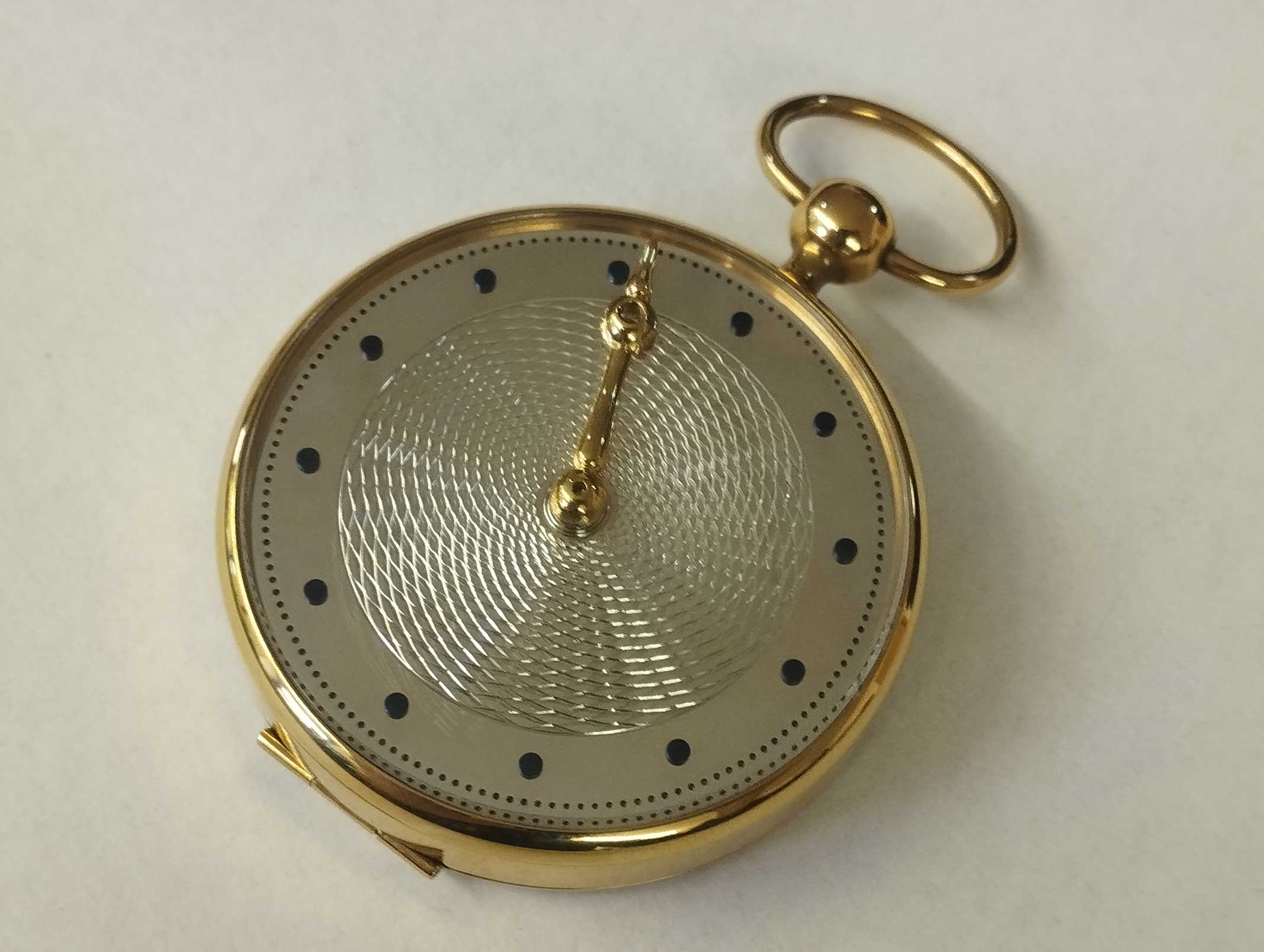
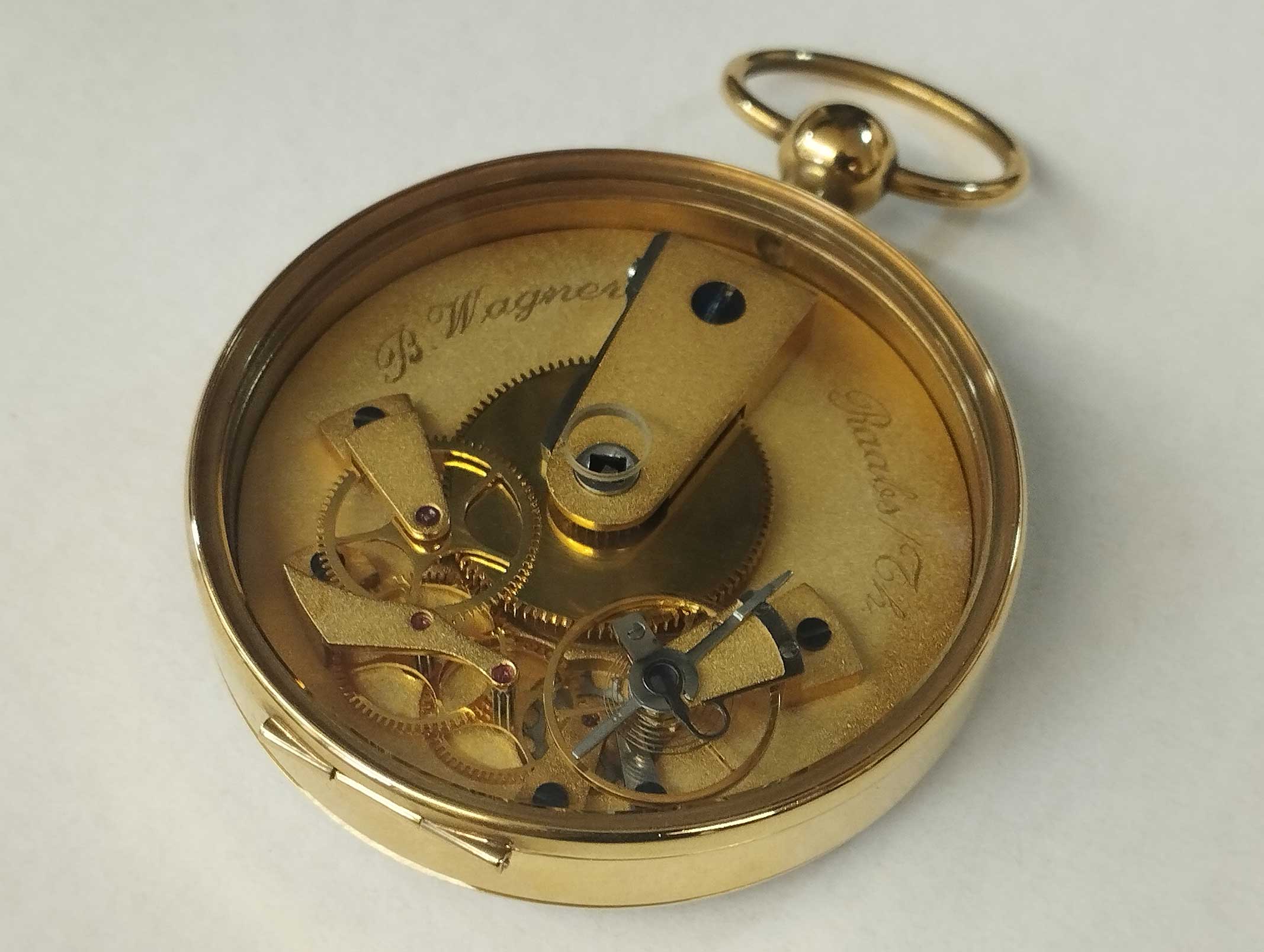
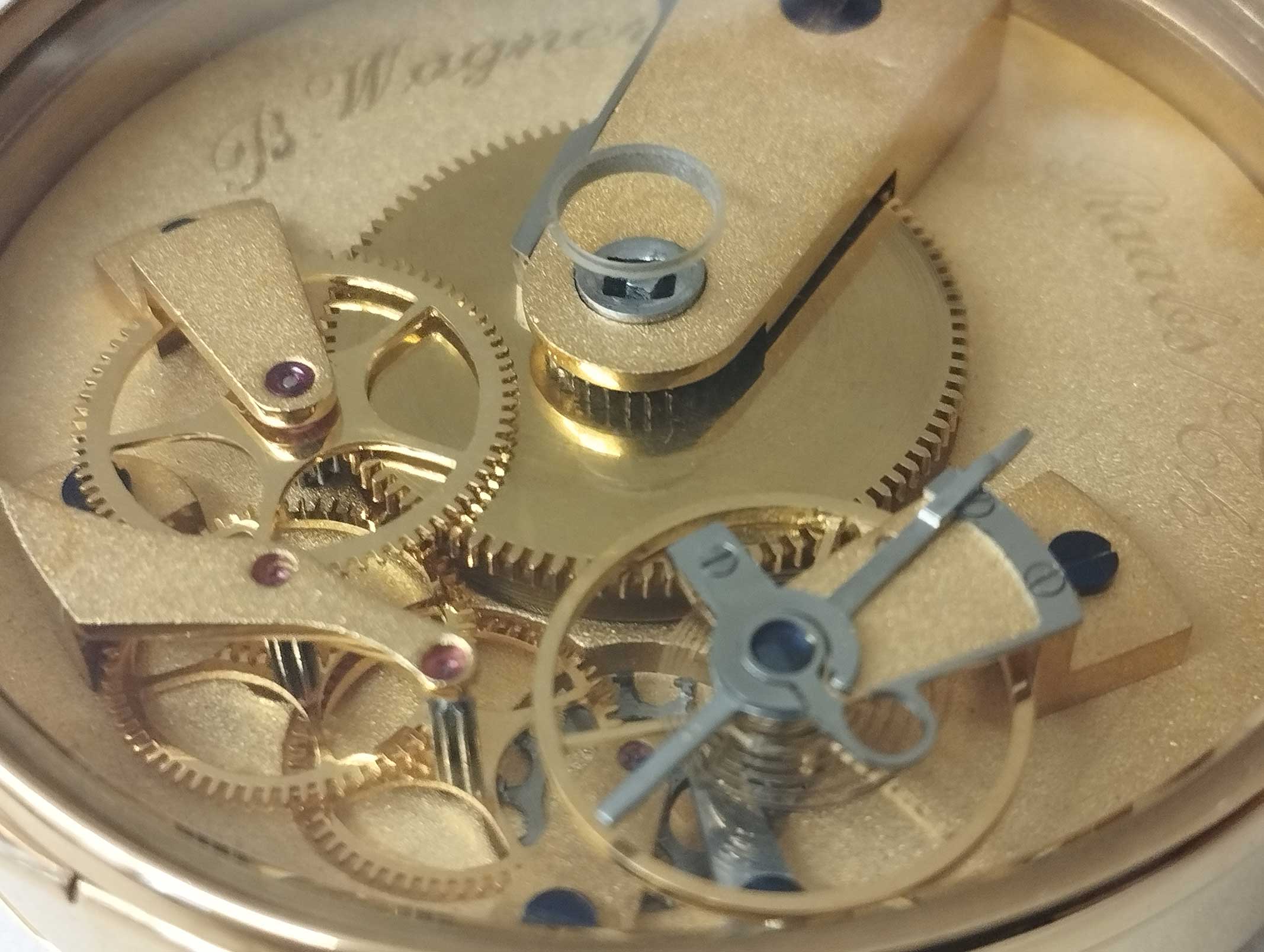
Today, only a handful of watchmakers worldwide still possess the skills required to produce these timepieces entirely by hand in their own workshops. The pocket watch shown here is one such exclusive piece. It pays homage to the great watchmakers of the 18th and 19 th centuries. Arnold, Berthoud and, above all, Breguet were the inspiration for the design of this extraordinary timepiece. Based on Breguet’s souscription pocket watches, it features a ruby cylinder escapement and a central barrel, just like them. However, unlike its historical predecessor, it has an improved winding and hand-setting mechanism comprising two interlocking square shafts. The manufacturing methods differ only slightly from those used around 1800. The escapement is named after the elaborately cut ruby cylinder, and the wheel arches are precisely filed and pressure-polished. The teeth are finished precisely using Ingold cutters, and the guilloché dial is made of solid sterling silver. This demonstrates that the methods of the old masters can still be used today to create something extraordinary.